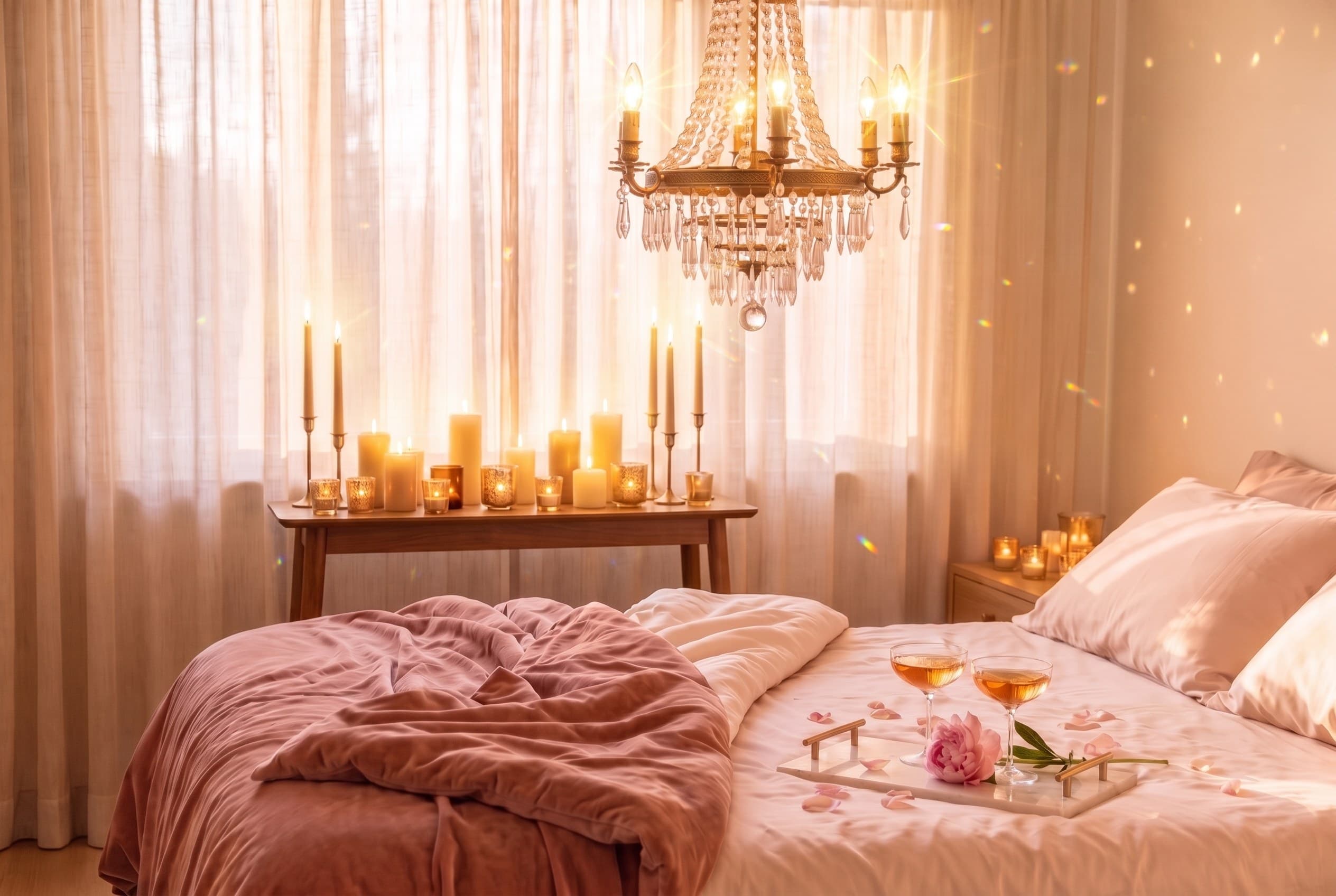
Light shapes how a room feels as much as how it looks. The same bedroom can feel clinical under a bright ceiling fixture and warm and restful under a few low lamps. Knowing a handful of principles lets you get it right on purpose.
This guide covers what light does to how we feel, how to read a bulb, how to use candles, dimmers and lamps well, and how to make the most of natural light.
How Light Affects Us
Light affects how alert we feel. Bright, cool-toned light, which is rich in blue wavelengths, promotes alertness and suppresses melatonin in the evening, while dimmer, warmer light is gentler on the body’s wind-down toward sleep. Most people also find low, warm light more relaxing to be in.
Direction matters as well. Overhead lighting casts hard shadows under the eyes and chin. Softer, diffused light from the side at around eye level, such as a shaded lamp, is far kinder to faces. Candlelight flatters mainly because it is dim, warm-toned and soft.
Research on lighting and conversation is mixed, so there is no universal formula. What matters most is that the light feels comfortable to the people in the room: soft enough to relax, bright enough to see each other.
Colour temperature is measured in kelvin (K) and printed on most bulb packaging. Candlelight is roughly 1,800 to 1,900K, warm white bulbs are 2700K to 3000K, and 4000K and above reads as cool and crisp: good for task areas, less restful in the evening.
Candlelight
Candles remain the most atmospheric light source: very warm in colour, softly flickering, and low in brightness. A few well-placed candles can change the feel of an ordinary room.
A single candle draws the eye to one spot; several at different heights add depth. Keep each one on a stable, non-flammable holder at least 30 cm from curtains, bedding and anything that can burn, out of reach of children and pets, and blow them all out before you leave the room or fall asleep. Flameless LED candles give a similar glow where a flame is not practical.
Well-made candles of any wax burn more cleanly when used properly: trim the wick to about 5 mm before lighting, keep candles out of drafts, and put them out when about 5 cm of wax remains.
Dimmers
Dimmers on overhead lights let you move from bright, practical light to a low evening glow. Adding a hard-wired dimmer is regulated electrical work that generally needs a permit, and the rules vary by province, so a licensed electrical contractor is the safest choice. Plug-in lamp dimmers and smart bulbs are simple alternatives.
Use LED bulbs marked “dimmable” in a warm 2700K to 3000K, and pair them with an LED-rated dimmer (often labelled “LED” or “CL”). Checking the bulb maker’s dimmer compatibility list prevents the flicker and buzz that mismatched bulbs cause.
Smart bulbs and switches can store lighting “scenes”, so a single tap moves a room from reading light to evening light.
Table and Floor Lamps
Lamps let you place light at different heights around a room, which looks more natural than a single overhead source. Bedside lamps give reading light without lighting the whole room; choose warm bulbs and shades that diffuse rather than glare.
Floor lamps that bounce light off the ceiling give soft, even light that is kind to skin tones. Small accent lamps can pick out artwork or plants and stop a room feeling flat.
Natural Light
Natural light changes through the day. Bright morning daylight helps set your body clock and makes you feel more alert, so opening the curtains early is worth the habit.
Late-afternoon “golden hour” light is low and warm, and very flattering to skin tones. If a room catches it, that is a lovely time to use the space.
Sheer curtains soften harsh sun while keeping privacy; blackout curtains give you full control. A mirror placed to catch daylight can brighten a room, as long as it does not throw glare where you sit or sleep.
Putting It Together
Notice the places where the light makes you feel comfortable, such as a favourite restaurant or hotel room, and what they have in common. Usually it is several low sources rather than one bright one.
Start with layers: ambient light for the room, task light for reading, and accent light for interest. Bulbs with a colour rendering index (CRI) of 90 or above show skin tones and fabrics more naturally. Build gradually and adjust to what the people using the room prefer.
A few warm lamps, a dimmer and one or two candles are all most rooms need.
