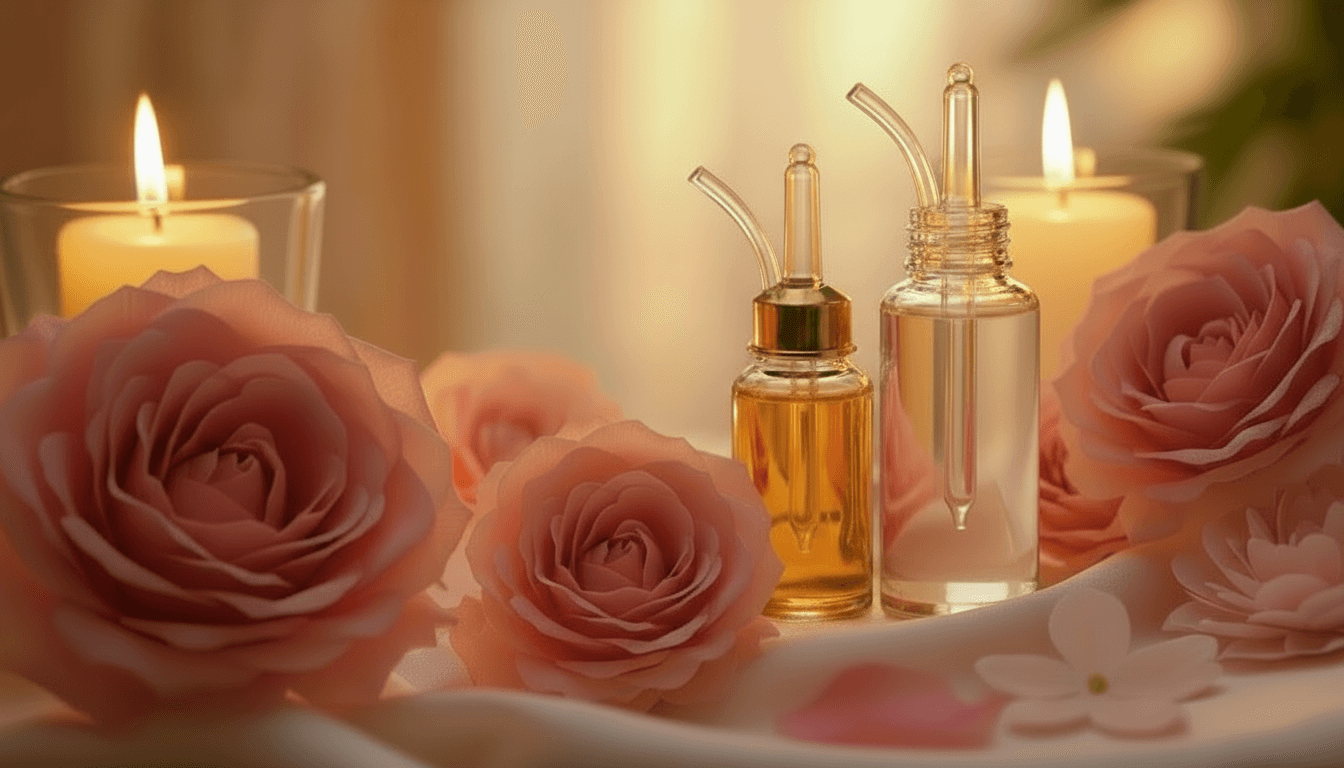
A sensual ritual is an ordinary part of the day done with attention: a morning stretch, a bath, the last half hour before sleep. The aim is not ceremony for its own sake, but a few unhurried minutes that belong entirely to you.
Unlike a routine driven by obligation, a ritual is chosen. It asks you to slow down, notice how your body feels, and do something kind for it on purpose. None of it needs to be elaborate, and none of it needs to be perfect.
Preparing the Space
Begin by tidying the space you plan to use; clutter pulls attention elsewhere. A small corner is enough. Add a few things you find beautiful: flowers, a smooth stone, a photograph or a piece of art.
Light marks the change from the busy part of the day. If you use a candle, keep it on a stable, non-flammable holder at least 30 cm from curtains, bedding and anything that can burn, out of reach of children and pets, and never leave it burning unattended. Soft, warm lamplight works just as well, and flameless candles are the easier choice near fabric.
Scent is optional. A candle, a diffuser or fresh flowers can make the space feel set apart. Keep scents light and the room ventilated, and take care with essential oils if you share your home with pets, because cats are particularly sensitive to many of them.
“Ritual is the way you carry the presence of the sacred. Ritual is the spark that must not go out.” — Christina Baldwin
A Calmer Morning
A few quiet minutes at the start of the day can make the rest of the morning feel less rushed. Before reaching for your phone, stay in bed a moment, notice the weight of your body against the mattress, and take three slow breaths.
Rise slowly. Stand, stretch your arms overhead, and let your shoulders drop. Then choose one small pleasure to do with full attention: making tea, washing your face, or applying a body oil or moisturizer with slow strokes. If you use essential oils on skin, dilute them in a carrier oil as Health Canada advises, and skip them if you are pregnant or breastfeeding.
The Ritual Bath
A bath turns an everyday routine into dedicated time to unwind. Water has been part of rest and ritual in many cultures, and treating a bath as protected time is what makes it restorative.
Set the room before you run the water: low light, soft music if you like, a towel and robe within reach. If you light candles, keep it on a stable, non-flammable holder at least 30 cm from curtains, bedding and anything that can burn, out of reach of children and pets, and never leave it burning unattended. Bath oils make the tub slippery, so step in and out with care.
Let your breathing slow and your attention rest on the warmth of the water. Keep it warm rather than hot. When you are ready, stand up slowly, since warm baths can leave you light-headed, wrap yourself in a soft towel, and blow out any candles before you leave the room.
Winding Down in the Evening
An evening ritual closes the day and prepares you for sleep. Change into something comfortable, dim the lights, and set screens aside for the last hour or two before bed. Bright light in the evening, especially from screens, suppresses melatonin, the hormone that helps you feel ready for sleep.
Spend a few minutes looking back on the day. What went well? What was hard? A short note in a journal is enough, and writing tomorrow’s first task down can stop it circling in your mind.
Let go of what you cannot change tonight. This is not about pretending a difficult day was easy, only about not carrying it into sleep.
Adapting Through the Year
Adjusting your rituals with the seasons keeps them fresh and suited to how you actually live: lighter and earlier in summer, slower and warmer in winter, with fresh flowers in spring and heavier textiles once the evenings turn cold.
Your own energy changes too. Some weeks you will want company and movement; others you will want quiet. Both are a normal part of how energy and mood shift over time, and a good ritual makes room for either.
Making It Your Own
The rituals that last are the ones built around your own preferences rather than a formula. Start small: five minutes each morning is more sustainable than an hour you cannot keep up. Notice which elements you look forward to, whether candlelight, movement, journaling or silence, and keep those.
Let your rituals change as your life does. The purpose is simply to give yourself time and attention. A ritual works when it leaves you calmer and more at ease.
Start with one small habit this week, and let it become yours.
