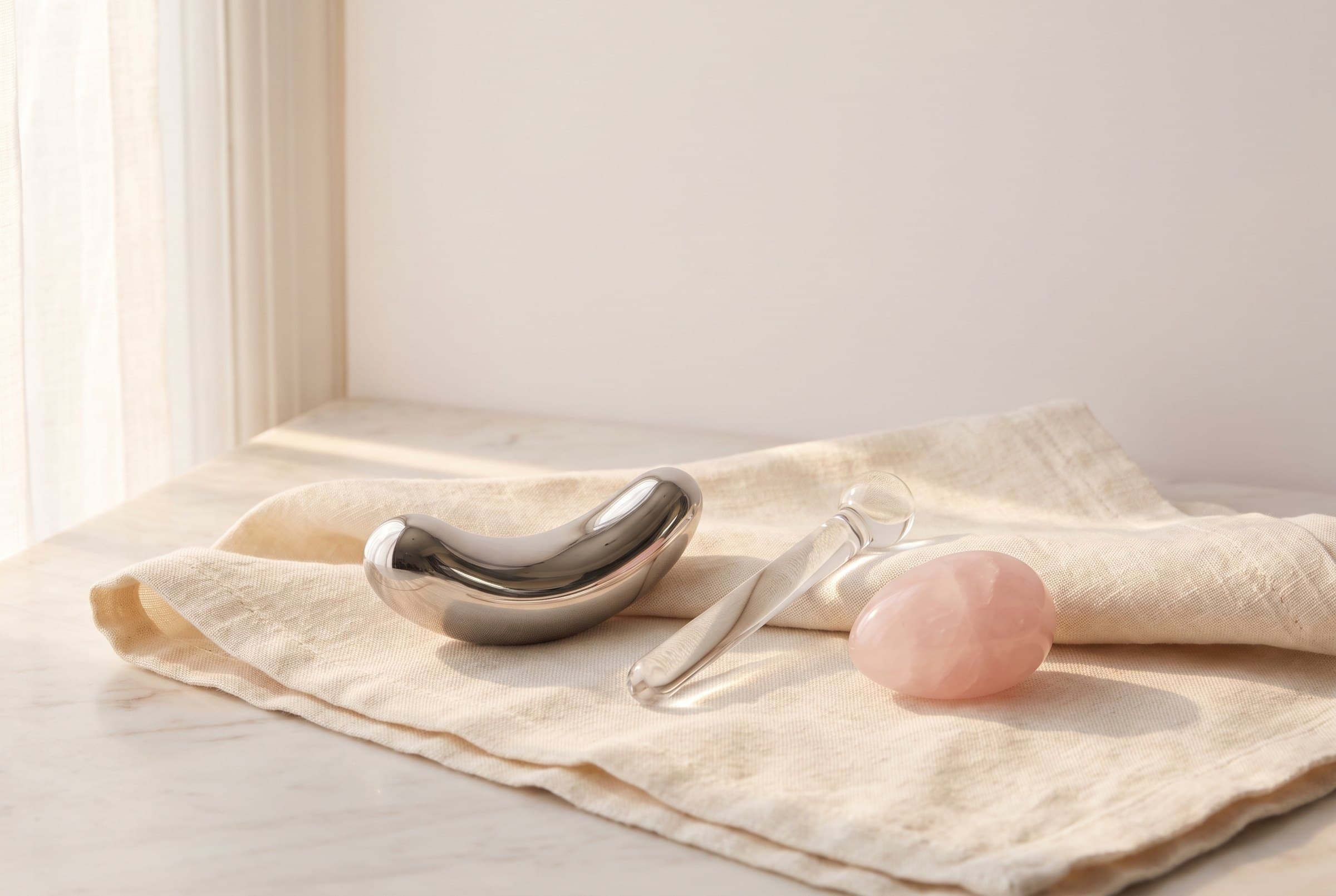
Intimacy includes the time you spend with yourself, and the pieces you choose for it touch the most delicate parts of your body. What they are made of matters as much as how they look or feel. A body-safe material is one you can clean thoroughly and that is made without questionable additives, and knowing the difference takes only a few minutes.
This guide explains what separates body-safe materials from the rest, how to read a product listing, which lubricants suit each material, and how the pieces in our rooms are made.
Porous and Non-Porous
The most useful distinction is whether a material is porous. Non-porous materials have a sealed surface, so a thorough wash with mild soap and water leaves nothing behind. A 2025 review in Canadian Family Physician groups silicone, glass, ceramic, metal and hard non-porous plastics as non-porous.
The same review lists thermoplastic rubber (TPR), thermoplastic elastomer (TPE), jelly rubber made from PVC, and skin-like blends such as “cyberskin” as porous. These softer materials feel wonderfully lifelike, but their surface has tiny pores that can hold on to moisture, lubricant and bacteria, so they can never be cleaned as completely.
The Non-Porous Materials
Silicone is the most common body-safe material: soft, flexible, warm to the touch and easy to clean. Look for listings that say 100 per cent silicone, platinum-cured or body-safe silicone; a very cheap piece described only as “silicone blend” may contain other fillers.
Borosilicate glass and stainless steel are completely non-porous, hold warmth or coolness well, and have a satisfying weight. Hard ABS plastic, the smooth casing on many rechargeable pieces, is also non-porous.
Natural stone such as rose quartz, obsidian and jade is beautiful and weighty, but it is a natural material rather than a manufactured one. Some stones are semi-porous and can chip, so choose polished pieces from a reputable maker, clean them gently and retire anything that is cracked.
Soft Elastomers
Strokers and sleeves are usually made from TPE or a similar elastomer because it is soft, stretchy and skin-like. When a maker lists it as phthalate-free, it is a reasonable choice for external use, with a few habits: wash it with warm water and mild soap, let it dry completely before storing it, keep it to one person, and replace it when the surface becomes tacky, torn or discoloured. Many are designed as single-use pieces for exactly this reason.
Phthalates and Labels
Phthalates are chemicals used to soften some plastics, particularly PVC. Canada’s Phthalates Regulations limit them in the soft vinyl of children’s toys and child care articles, but they do not set limits for adult products, so the maker’s material list is your best guide. Look for a specific material (“100% silicone”, “borosilicate glass”, “phthalate-free TPE”) rather than vague words like “jelly”, “rubber” or “novelty use only”.
A strong chemical smell, an oily or sticky surface, or a material that changes colour or texture over time are all signs to stop using a piece.
Matching Lubricant to Material
According to the same Canadian Family Physician review, water-based lubricant works with every material. Silicone-based lubricant is not compatible with silicone pieces, and oil-based lubricant is not compatible with porous plastics and synthetic rubbers. Glass, ceramic, metal and non-porous plastics work with all three types. Our guide Choosing the Right Lubricant covers this in more detail.
Sharing and Hygiene
On your own, a clean, dry piece stored in its own pouch is all the care most materials need. If a piece is shared, the BC Centre for Disease Control advises using a new condom on it for each person, or cleaning it between uses, and using a new condom or cleaning it when switching from anal to genital or oral use. Porous pieces are best kept to one person.
Anything with a motor should only go under water if the maker rates it as fully waterproof. Our guide Caring for Your Pieces sets out cleaning and storage for each material.
How We Choose
Most pieces in our rooms that are made for internal use are silicone, borosilicate glass, stainless steel, polished stone or hard ABS plastic, and our product pages list what each piece is made of. Strokers and sleeves use soft TPE or elastomer that their makers describe as phthalate-free, and we note when a piece is designed for single use. If a listing ever leaves you unsure, write to our concierge and we will tell you exactly what it is made of.
Choose materials you can clean completely, match your lubricant to them, and your pieces will stay safe, beautiful and yours for years.
