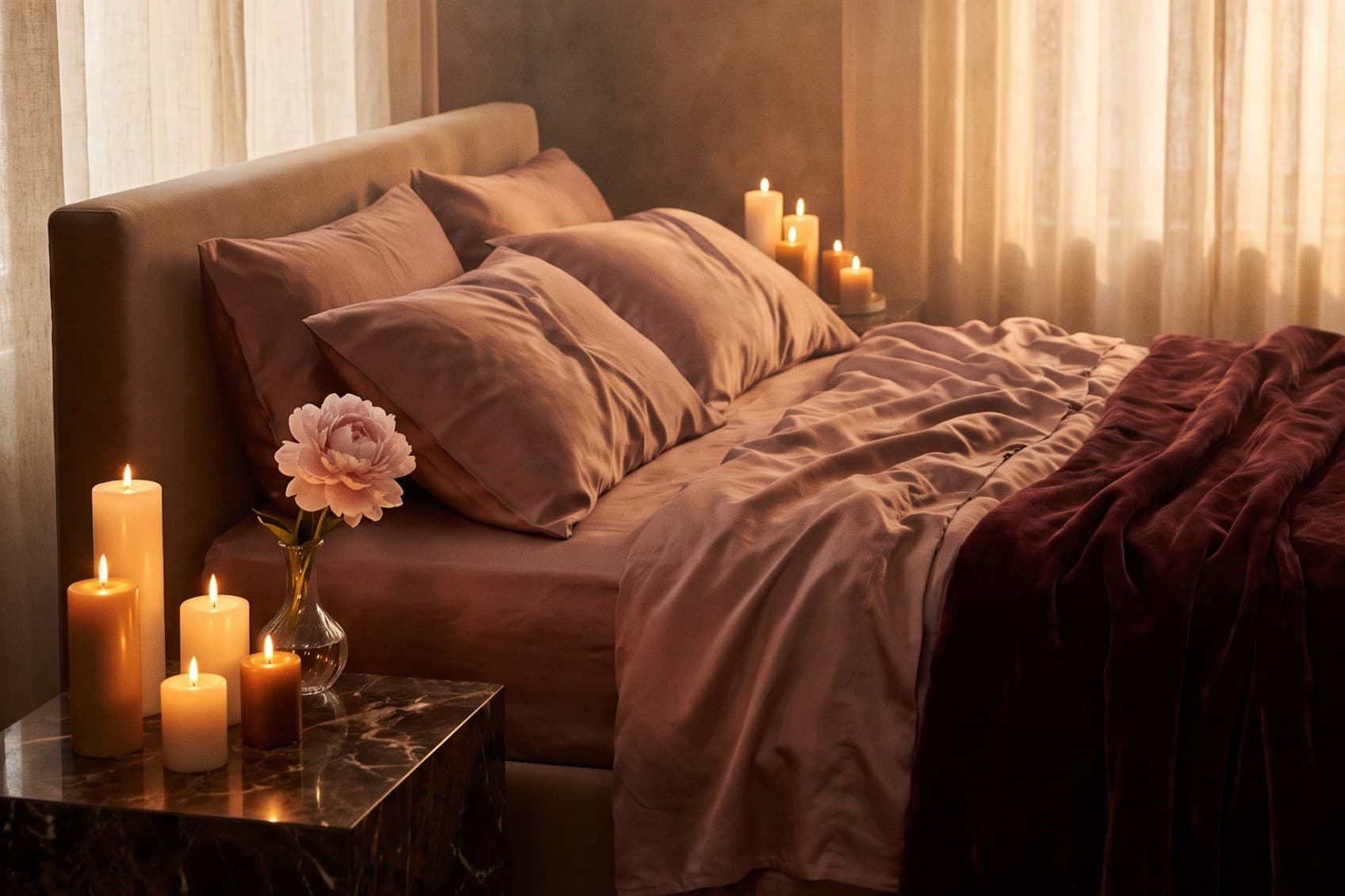
A bedroom works best when it feels calm, comfortable and like yours. Good design here is less about following trends and more about light, texture, temperature and the few objects that mean something to you.
The rooms we spend time in affect how relaxed we feel. A few deliberate choices can make a space easier to rest in and more pleasant to share.
Start With the Basics
Warm, soft tones tend to feel restful; natural textures add warmth and depth; low, diffused lighting feels relaxed where harsh overhead light feels clinical.
Aim for a room where you can switch off: clutter out of sight, work kept elsewhere if possible, and everything you use at night within easy reach.
“The details are not the details. They make the design.” — Charles Eames
Lighting
Layer the light: a dimmable overhead fixture or none at all, bedside lamps with warm bulbs, and perhaps one accent lamp. For bulb temperatures and dimmer advice, see Creating Ambiance Through Light.
Place candles at varying heights on stable, non-flammable holders on bedside tables, dressers or a tray, at least 30 cm from curtains and bedding and out of reach of pets. Always blow them out before sleep; flameless LED candles are a good choice near fabric.
String lights add a soft glow. Salt lamps give off a very warm, low amber light that works well as a night light.
Textures and Textiles
Layer textures you enjoy touching: smooth sheets, a velvet cushion, a wool or cashmere throw, a natural-fibre rug. Variety makes a room feel richer and gives different options for different seasons.
Sheets make the biggest difference. Look for silk, long-staple cotton such as Egyptian or Pima, or viscose or lyocell made from bamboo or wood. With cotton, fibre quality matters more than thread count; around 300 to 400 is plenty.
Zones and Sleep
Even a small room can hold distinct areas. A sleeping zone should prioritize comfort, darkness and a cool temperature; HealthLink BC advises keeping the bedroom quiet, dark and cool. Blackout curtains or an eye mask help, and charging phones outside the bed area keeps screens out of the last hour before sleep.
If space allows, add a spot that is not the bed: a comfortable chair with a reading lamp, a cushion for stretching, or a small table for skincare.
Natural Elements
Plants, flowers and natural materials soften a room and make it feel lived-in and calm.
Pothos, snake plants and succulents are easy to care for, but pothos and snake plants are toxic to cats and dogs, so check before choosing if you have pets. Fresh flowers, even a simple grocery store bouquet, bring colour and fragrance.
Wood, stone and linen add warmth and texture, and age well with use.
Personal Touches
Display a few things that matter to you: art, photographs, something from a trip. A handful of meaningful objects makes a room feel personal without cluttering it.
Changing small elements with the seasons, such as bedding weight, a throw or the flowers on the dresser, keeps the room feeling fresh without redecorating.
Good light, good sheets and a few things you love will do most of the work.
