There is a hammock of muscle at the base of your body that you have probably never seen, rarely think about, and rely on every minute of the day. It holds your organs where they belong, keeps you dry when you laugh, and has a great deal to say about how pleasure feels. Most of us meet it only when something goes wrong. This is an invitation to meet it sooner, and more kindly.
Why It Matters
Pelvic floor health used to be filed under “things that happen after babies”. It is far wider than that. Pregnancy and birth ask a great deal of these muscles, and the postpartum months are when many women first notice a leak or a heaviness. The menopause transition brings its own shift, as falling estrogen thins the vaginal and urinary tissues and can weaken the pelvic floor. And women in high-impact sport — running, jumping, lifting — experience leaking considerably more often than less active women.
There is no stage of adult life where this part of you is irrelevant.
What the Pelvic Floor Actually Does
Picture a shallow bowl of muscle stretched from the pubic bone to the tailbone, and from one sitting bone to the other. Layers of it wrap around the urethra, the vagina and the rectum. Its first job is support: holding the bladder, uterus and bowel in place against gravity and every cough, sneeze and jump.
Its second job is continence. When it contracts well and relaxes well, you decide when to go. Its third job is rarely mentioned in a clinic: these are the muscles that respond to arousal and contract rhythmically during orgasm. A floor that can move through its full range, from soft to strong and back again, is a floor that tends to respond more fully.
That last word matters. Range. Strength alone is not the goal. A muscle that is always clenched is as unhelpful as one that has forgotten how to contract at all.
Signs Worth Noticing
Weakness tends to announce itself in small, private ways. A little leak when you laugh, sneeze or run. A heaviness or dragging low in the pelvis by evening. Needing the washroom more urgently than you used to. Less sensation during sex.
Over-tightness, which physiotherapists call a hypertonic floor, is often mistaken for weakness. Its signs are different: pain or burning with penetration, or the feeling that nothing can go in at all; difficulty fully emptying your bladder, or a stream that stops and starts; constipation; a dull ache in the pelvis, hips or tailbone. If several of these feel familiar, more squeezing is not the answer, and a pelvic health physiotherapist is the right first step.
The Breath Comes First
Your diaphragm and your pelvic floor move together. When you inhale fully and let your belly soften, the floor lowers and lengthens. When you exhale, it gently lifts. Many of us breathe high in the chest all day, which means the floor rarely gets to release.
Try this once a day, lying down with your knees bent. Place a hand on your lower belly. Breathe in slowly through your nose and let the hand rise, imagining the space between your sitting bones widening. Breathe out and let it fall, without forcing anything. Five minutes of this is not just a warm-up. For a tight floor, it is often where a physiotherapist will begin.
Kegels, Done Properly
A kegel is a deliberate contraction of the pelvic floor, and done well it is genuinely useful for a floor that has lost tone. The trouble is that many people do them incorrectly from written instructions alone — in one study, only about half managed a correct contraction — and some who do not need them do them anyway.
Here is the shape of a proper one. Exhale, and imagine gently drawing the muscles up and in, as if holding back gas. The lift is inward and upward; your belly, thighs and buttocks stay still. Hold for a few seconds while still breathing, then — and this is the part everyone skips — release completely and feel the muscles drop all the way down. Rest for five to ten seconds before the next one. Stopping your urine midstream is a way to find the muscles once or twice, not a way to train them; HealthLink BC notes that making a habit of it could, over time, hurt your bladder.
HealthLink BC suggests ten slow squeezes with full releases per session, three or more sessions a day, starting with a three-second hold and adding about a second each week until you reach ten. Quality matters more than volume, and constant clenching is not training. If your symptoms match the over-tight list above, or kegels cause pain, stop and see a pelvic health physiotherapist before continuing.
Trainers and Weights
Once you can find the muscles and release them cleanly, a trainer gives you something to feel against. Kegel trainer sets usually come as a graded series, each a little heavier or smaller than the last. Begin with the lightest, insert it with a little water-based lubricant, and simply keep it in place while you breathe and move gently for a few minutes. When that feels effortless for a week or so, move to the next.
Graded trainers have modest evidence behind them, similar to exercises alone. If you are pregnant, recently postpartum, have an infection or feel any pain, check with your physiotherapist or doctor first.
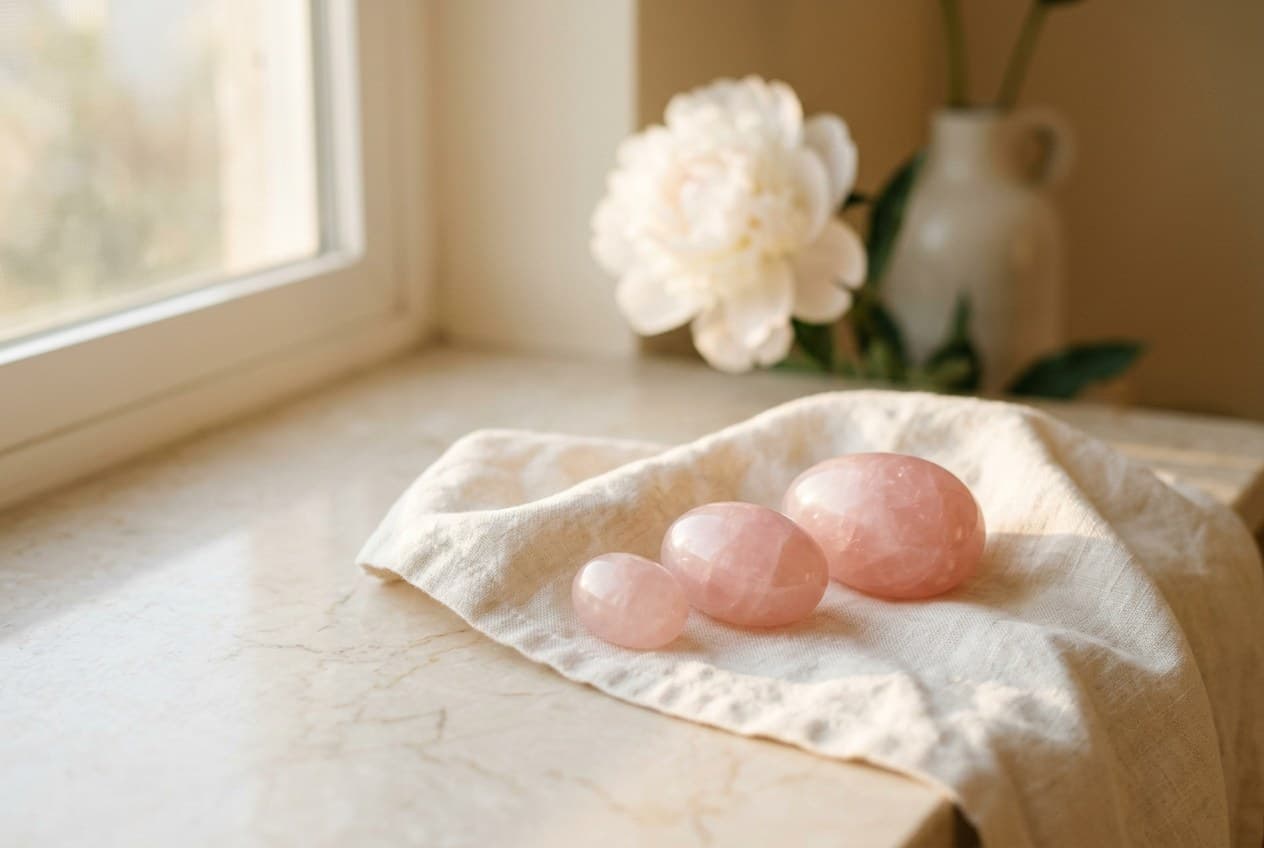
Stone eggs are different: there is no good evidence that they strengthen the pelvic floor, and gynecologists caution that some stones are semi-porous and harder to clean, and that holding one for long periods keeps muscles clenched. If you choose one, keep sessions short. Whatever you use, never sleep with it in, wash before and after with warm water and a mild, unscented cleanser, dry fully, and retire anything cracked or chipped.
When to See Someone
A pelvic floor physiotherapist is the person to see when you are not sure whether your floor is weak or tight, when leaking or heaviness lingers beyond a few months postpartum, when sex hurts, or when you have been doing exercises faithfully and nothing changes. They assess gently and, with your consent, internally, and can often give you a clear picture early on. In Canada you can usually book a physiotherapist directly, though some insurance plans require a referral for reimbursement.
A sudden bulge, unexpected bleeding, blood in your urine, pelvic pain with fever, or being unable to pass urine at all means a doctor promptly, not a waiting list.
None of this is about becoming tighter or more impressive for anyone else. It is about a part of your body that has been holding you up all along. When the floor can rise and fall with your breath, sensation, comfort and confidence often follow. Our Quiet room holds graded trainer sets for when you are ready to practise, alongside rose quartz and obsidian eggs for those drawn to them, and our Gentle Care room holds the cleansers and lubricants that keep the practice kind to you.
