Most men know roughly where the prostate is and almost nothing else about it, which is odd for a gland that shapes how you urinate, how you climax and how you feel in your body from your forties onward. This is the conversation you probably have not had. It is calmer than you expect.
Why It Matters
The prostate is small, about the size of a walnut, and it sits low in the pelvis just below the bladder, wrapped around the tube that carries urine out of the body. That position is the whole story. When the gland is healthy you never notice it. When it swells, tightens or grows, it presses on that tube, and the first thing you feel is a change in how you pee.
Three things tend to happen to it over a lifetime. It can enlarge, which is called benign prostatic hyperplasia, or BPH; it is rare before 40 but present in most men by their seventies, so it is closer to normal aging than disease. It can become inflamed or infected, which is prostatitis. And it can develop cancer, the most commonly diagnosed cancer in Canadian men (other than non-melanoma skin cancer), though often slow growing and often very manageable when found early. None of these is a reason to worry in advance. All of them are reasons to know your own baseline.
What the Prostate Does
Its job is reproductive. The prostate produces a thin, milky fluid that makes up roughly 15 to 30 per cent of semen, carrying enzymes, including PSA, that help liquefy semen and help sperm move. During orgasm the muscle within the gland contracts and pushes that fluid into the urethra, which is part of why ejaculation feels the way it does. The gland also sits close to the front wall of the rectum, which is why it can be reached, and why it is a source of deep pleasure for many men.
It is hormone sensitive, growing under the influence of testosterone and its more active form, DHT, which is why it keeps changing through adulthood.
The Check-Up Conversation
There is a blood test called PSA, prostate-specific antigen, that measures a protein the gland releases. A higher reading can point to cancer, but it can also rise with BPH, infection, recent ejaculation or simply age, and a normal reading does not rule cancer out. Because of that, Canadian guidance is divided. The national guideline, last updated in 2014 by the former Canadian Task Force on Preventive Health Care, advises against routine PSA screening, and the body that replaced it in 2026, the National Advisory Committee on Preventive Health Services, has been asked to review that advice. The Canadian Urological Association and the Canadian Cancer Society recommend an informed, shared decision with your doctor, weighing the chance of catching something serious against the chance of anxiety, biopsies and treatment for a cancer that might never have troubled you.
A sensible approach is to raise it at a routine appointment from about age 50, or from 45 if you are Black (including men of African or Caribbean ancestry) or your father, brother or son has had prostate cancer. If you carry a known BRCA2 gene change, ask about an individualized plan, ideally with a genetics specialist. Early prostate cancer often causes no symptoms at all, so feeling well is not a reason to skip the conversation. Ask what a result would actually change, and what happens if it is borderline.
Everyday Habits That Help
The evidence here is honest rather than dramatic. Regular physical activity is linked with a lower risk of BPH and fewer urinary symptoms. The Canadian Cancer Society lists excess body weight as a risk factor for prostate cancer, linked with cancers found at a later stage and with high-grade disease, so the habits that protect your heart are worth keeping here as well. Evidence on specific diets is still limited, and there is not enough research to show that vitamin E or selenium supplements lower the risk; in one large trial, daily vitamin E was linked with a 17 per cent higher risk.
Then there is the question men ask quietly. A large, long-running study of more than 30,000 health professionals found that men who ejaculated twenty-one or more times a month had roughly a fifth lower risk of prostate cancer than those who did so four to seven times. That is an association, not a proven cause, it relied on men reporting their own habits, and the link was weaker for aggressive cancers. Still, it offers no reason to think regular sexual release, alone or with someone, does anything but sit comfortably on the side of care.
The Male Pelvic Floor
Beneath the prostate lies a sling of muscle that supports the bladder and bowel, closes off the urethra when you need it closed, and helps maintain an erection. Most men have never consciously found it. Try this: squeeze the muscles you would use to hold back gas, or to stop the flow of urine midstream. That is it. Use the midstream test only once or twice to find it; making a habit of it could, over time, hurt your bladder.
Training it is not just about squeezing. Strength matters for continence, especially after prostate treatment, and small trials suggest pelvic-floor exercise may improve erections and help some men who finish sooner than they would like. But a pelvic floor that is always clenched causes its own trouble, including the aching, pressure and urinary discomfort of chronic pelvic pain. So the practice is a rhythm: a slow inhale where you let everything soften, a gentle lift as you exhale, then a full release. The release is the half most men skip. If you have pelvic pain, see a doctor or pelvic health physiotherapist before starting.
Massage, Wellness and Pleasure
Prostate massage means applying gentle pressure to the gland through the wall of the rectum, where it sits a few centimetres inside, toward the front of the body. Doctors once used it routinely for prostatitis and some still do, though the medical evidence is thin. For many men, though, the sensation is deep and distinctive, and a source of real pleasure.
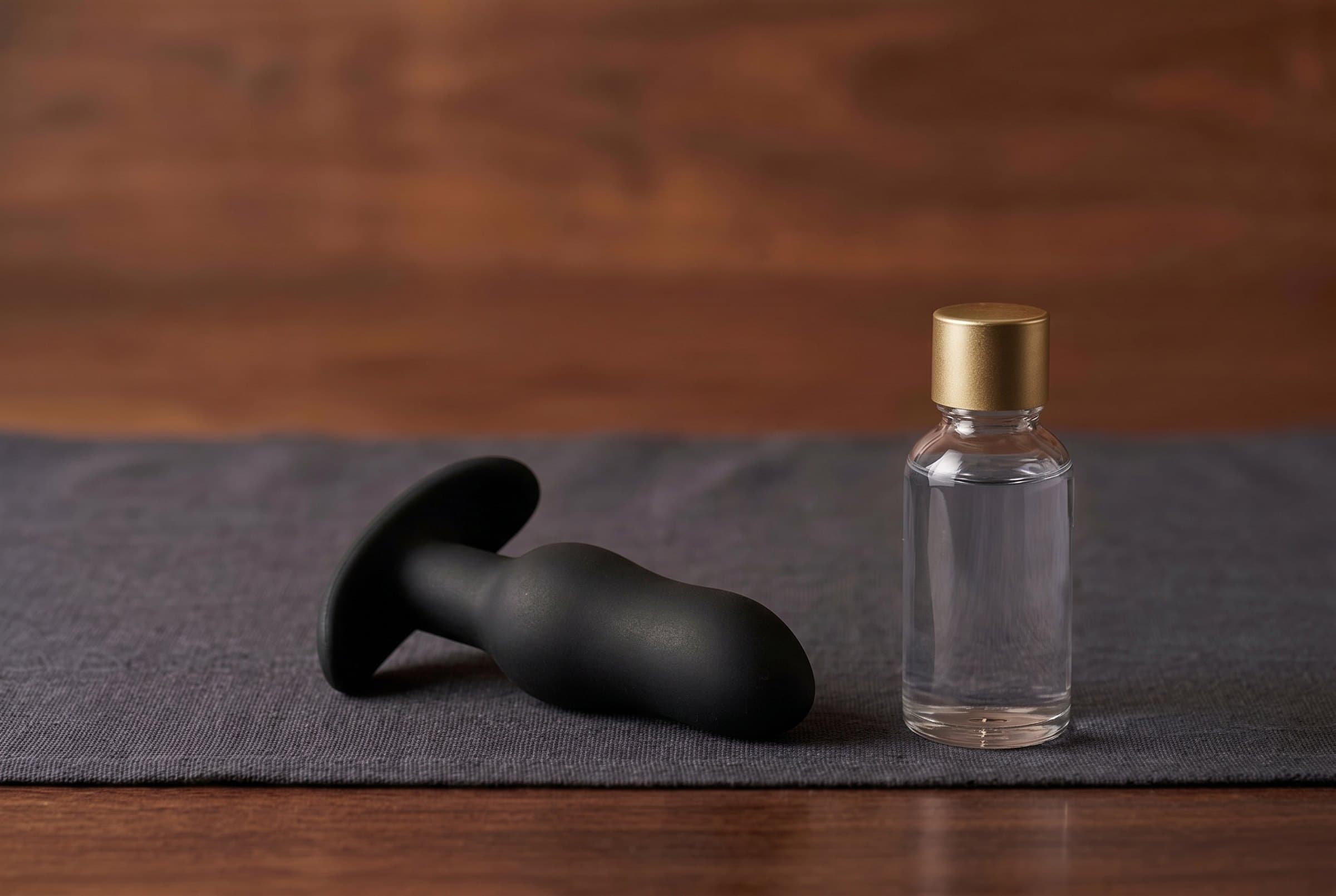
If you are curious, go slowly. Arousal helps, breath helps, and the muscles at the entrance relax on an exhale. Use a generous amount of water-based lubricant, because the rectum makes none of its own. Trim and wash your hands, or use a purpose-made piece. Choose one with a flared base so it cannot travel where you do not want it, in a body-safe, non-porous material you can properly clean. Small first. Pressure, not force. Stop if anything hurts, skip it entirely while you have an active infection, a flare of hemorrhoids or a fissure, and ask your doctor first if you have had recent prostate or rectal surgery.
When to See a Doctor
Some changes should not be waited out. A stream that has grown weak, hesitant or hard to start. Needing to go far more often, or getting up more than once or twice a night when you never used to. A sense that the bladder never fully empties. Any blood in your urine or semen. Pain in the pelvis, low back, perineum or testicles, or pain with ejaculation. If urinary symptoms arrive with fever, chills or feeling generally unwell, that can be an acute infection that needs treatment the same day. Being unable to pass urine at all is an emergency. None of this replaces your own doctor’s advice.
Know what normal feels like for you, have the check-up conversation on your own terms, move your body, and let pleasure and care overlap where they naturally do. In the Anchored room you will find prostate massagers with flared bases in body-safe materials, and in Gentle Care the water-based lubricants and cleansers that belong beside them.
